vidIQ Research, June 2026
Profitable YouTube Niches for Small Channels: 2026 Breakout Study
A June 2026 review of breakout data across hundreds of channels under 100,000 subscribers identified ten niches where small creators were finding reach and advertiser demand. The opportunity came from specific formats, not from choosing a broad category alone.
vidIQ Research/Updated June 12, 2026
Watch the original profitable-niches analysis on YouTube
Study parameters
Hundreds
Channels reviewed
<100K
Subscriber ceiling
June 2026
Study snapshot
The finding
Specific, trust-building formats created the opportunity.
High advertiser demand was not enough on its own. Breakout examples paired a valuable audience with a format that general channels often missed: local housing analysis, applied AI workflows, automotive advocacy, evidence-led fitness, honest DIY, and budget-first off-grid builds.
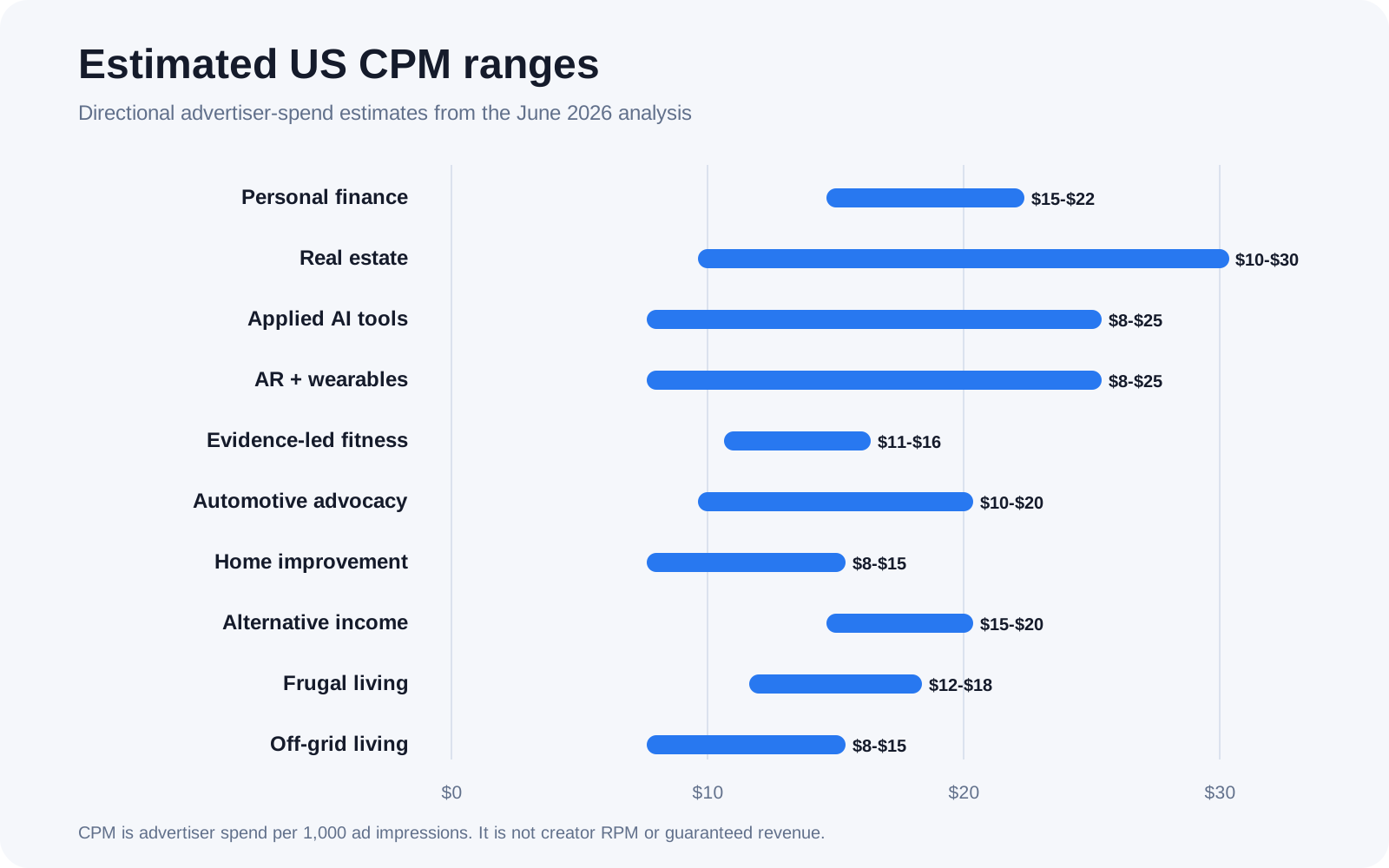
| Niche | Tier | Estimated US CPM | Breakout format |
|---|---|---|---|
| Personal finance | S | $15 to $22 | Specific numbers and identity warnings |
| Real estate | S | $10 to $30 | Local data and contrarian confessions |
| Evidence-led fitness | S | $11 to $16 | Myth tests and human experiments |
| AR and wearables | A | $8 to $25 | First-mover comparisons and daily utility |
| Automotive advocacy | A | $10 to $20 | Repair truth and consumer protection |
| Honest home improvement | A | $8 to $15 | Specialized builds and visible mistakes |
| Applied AI tools | B | $8 to $25 | Vertical workflows and replacements |
| Alternative income | B | $15 to $20 | Specific systems with real proof |
| Frugal living | B | $12 to $18 | Cultural frameworks for spending |
| Off-grid living | B | $8 to $15 | Budget independence and honest builds |
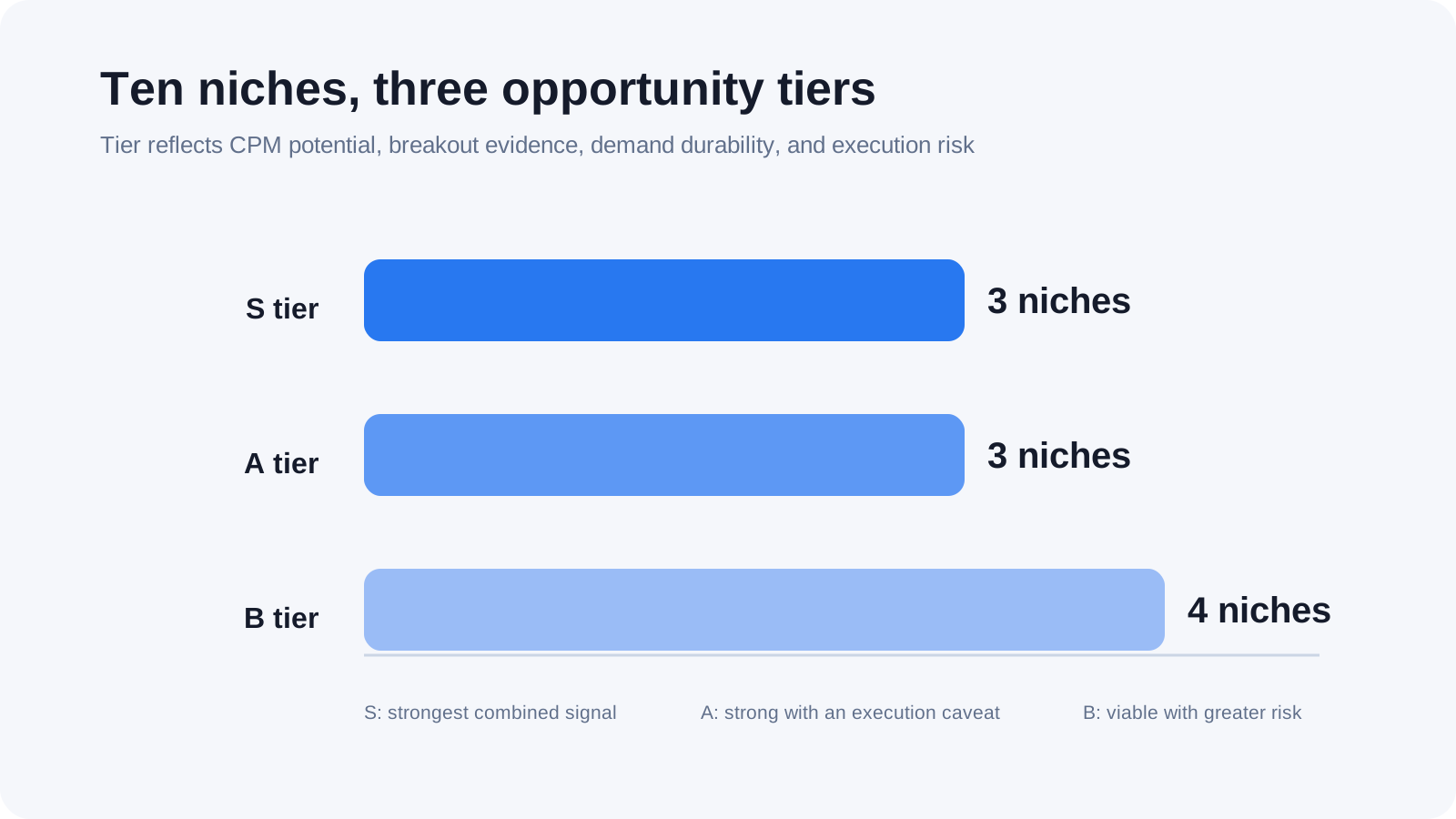
Three S-tier niches combined demand with durable formats
Personal finance, real estate, and evidence-led fitness received the highest overall tier because the source analysis found strong advertiser demand plus repeatable audience interest. This research page is limited to the June 2026 small-channel breakout snapshot.
What this does not prove
This study does not prove that entering one of these niches will make a channel profitable. CPM is the amount advertisers pay per 1,000 ad impressions, not the creator's RPM or take-home income. Geography, seasonality, audience age, video length, ad suitability, monetized playbacks, sponsorships, affiliate conversion, production costs, and creator expertise all change the economics. The breakout examples were selected public cases rather than a random platform sample.
Methodology
- Source date: the original vidIQ analysis was published on June 12, 2026.
- Channel scope: breakout data was reviewed across hundreds of public YouTube channels with fewer than 100,000 subscribers.
- Opportunity lens: niches were assessed using three inputs reported in the source analysis: estimated US-audience CPM, evidence of small-channel breakouts, and durability of audience demand.
- Tier definitions: S-tier combined the strongest CPM and breakout signals with durable demand. A-tier was strong with a material execution caveat. B-tier was viable but carried greater timing, competition, trust, or cost risk.
- CPM reporting: ranges are directional estimates for a US-heavy audience. This page preserves the published ranges and does not convert them into unsupported revenue forecasts.
- Format review: each niche was paired with the recurring content angle visible in its cited breakout examples, such as local analysis, practical advocacy, myth testing, or honest transformation.
- Selection limit: the public source described hundreds of channels but did not publish the exact channel count, full export, inclusion query, or per-niche sample size. Results are descriptive opportunity signals, not platform-wide averages.
- Intent boundary: this study reports one dated breakout snapshot. The evergreen niche guide remains the primary resource for broad niche selection advice, and the YouTube Niche Finder remains the primary tool for personalized discovery.